

Divorce vs. Dissolution in Ohio: 11 Key Questions to Help You Understand Your Options
- June 5, 2026 | By James LaPolla | Family Law, Q&A | Contact the Author
Navigating a separation can be highly stressful and challenging, especially when children are involved.
In Ohio, understanding the legal pathways available to end a marriage can make a meaningful difference in how smoothly the process unfolds.
Whether you and your spouse are aligned on major decisions or facing disagreements, knowing the distinction between divorce and dissolution, and how Ohio law treats each, can help you make more informed choices.
Here are some common questions and answers that often come up between partners looking to separate.
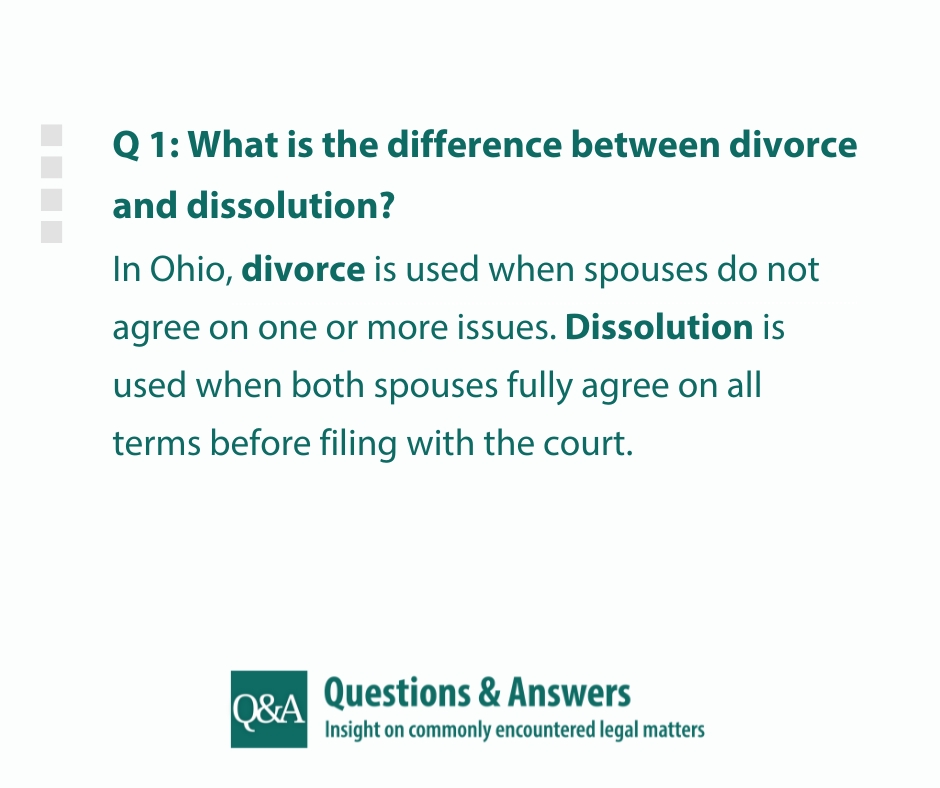
What is the difference between divorce and dissolution?
In Ohio, divorce is used when spouses do not agree on one or more issues involved in ending
the marriage. Dissolution is used when both spouses fully agree on all terms before filing with
the court.
In a divorce, the court may need to resolve disputed matters through hearings or trial, whereas
a dissolution is typically more streamlined because all terms are settled in advance.
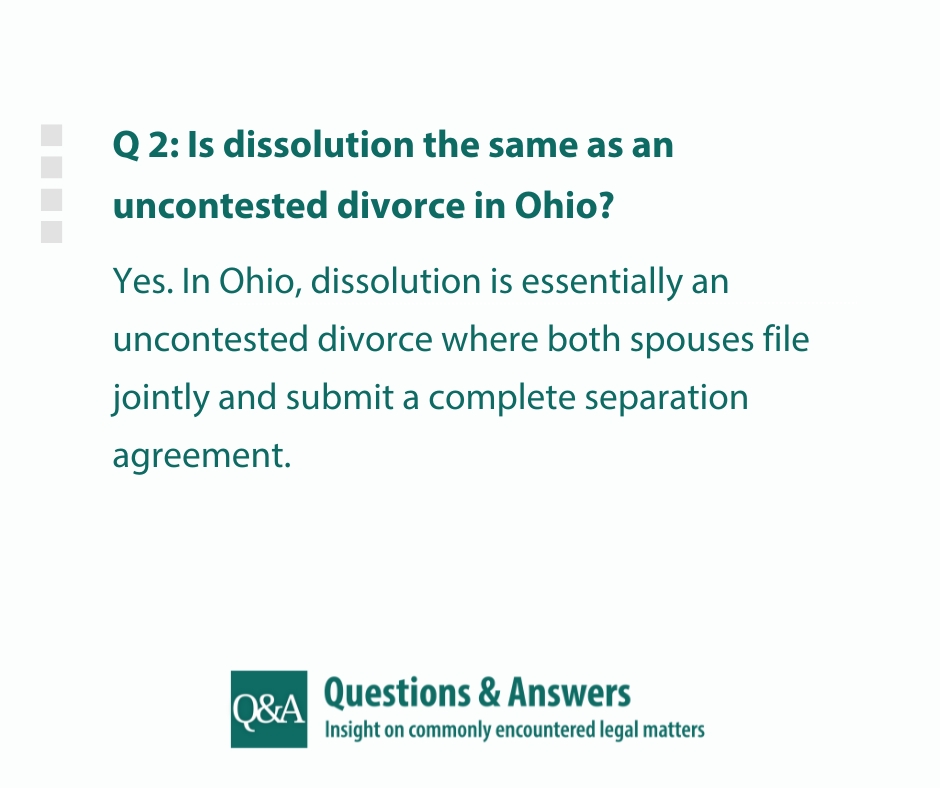
Is dissolution the same as an uncontested divorce in Ohio?
Yes. In Ohio, dissolution is essentially an uncontested divorce where both spouses file jointly
and submit a complete separation agreement.
Unlike some other states, Ohio uses the term “dissolution” rather than “uncontested divorce,”
and it requires both parties to appear briefly before a judge to finalize the agreement.
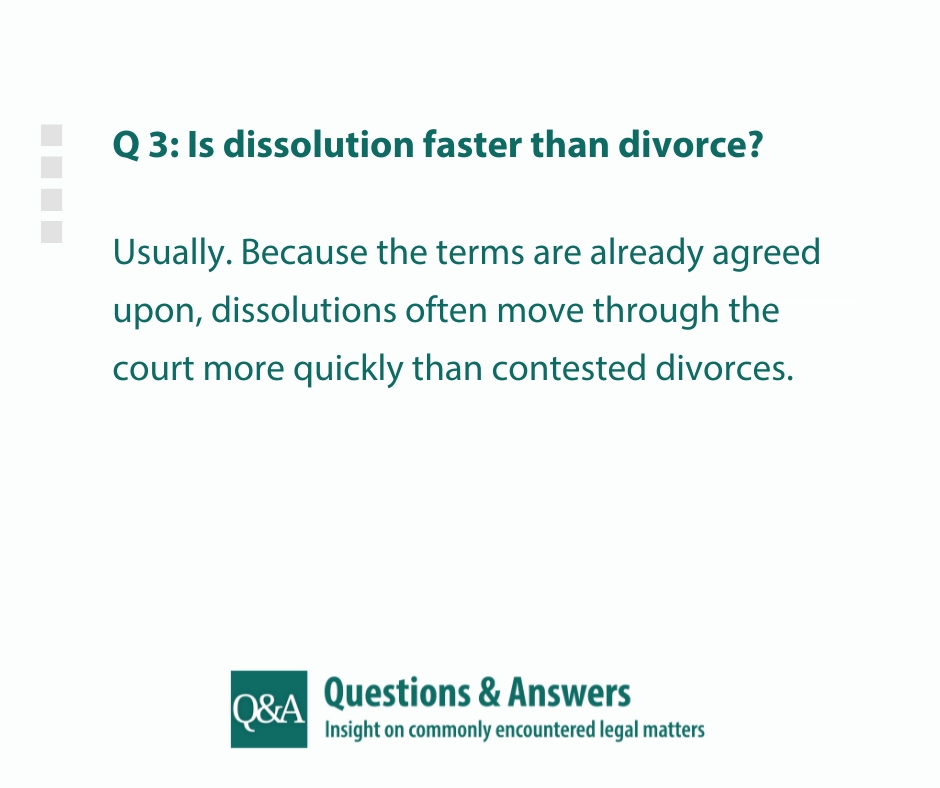
Is dissolution faster than divorce?
Usually, yes. Because the terms are already agreed upon, dissolutions often move through the
court more quickly than contested divorces.
Ohio law requires a hearing within a certain timeframe after filing, which helps keep the process
relatively efficient compared to litigated divorce cases.
Is dissolution less expensive than divorce?
Often, yes. Dissolution typically involves fewer court appearances and less attorney
involvement, which can lower overall legal costs.
If you can avoid prolonged litigation, discovery and multiple hearings, you can significantly
reduce both legal fees and emotional strain.
Here’s a blog post about how mediation can be less time-consuming and costly compared to
divorce litigation.
Do both spouses have to agree to a dissolution?
Yes. Full agreement is required on terms relating to property, debt, support and parenting
issues (if applicable). If agreement on all matters cannot be achieved, the case may proceed as
a divorce.
Ohio courts will not grant a dissolution unless the agreement is complete and mutually accepted
at the time of filing and at the final hearing.
What must be agreed on for a dissolution?
Spouses must agree on the following:
- Division of assets and debts
- Spousal support, if any
- Child custody, parenting time and child support (if applicable)
Ohio law requires these terms to be clearly outlined in a written separation agreement, which
becomes part of the final court order once approved by the judge.
Do you need a lawyer for a dissolution in Ohio?
A lawyer is not required, but legal guidance is often recommended to ensure the agreement
complies with Ohio law and protects each party’s rights.
Even in amicable situations, a lawyer can help identify potential issues, ensure proper
documentation and avoid mistakes that could delay court approval.
Is dissolution a good option if children are involved?
Yes, if both parents agree on custody, parenting time and support arrangements.
Can a dissolution turn into a divorce in Ohio?
Yes. If spouses are unable to maintain agreement, this dissolution can be dismissed and a
divorce is filed instead.
This shift may introduce contested proceedings, which can increase both the timeline and
complexity under Ohio domestic relations law.
Does a judge still review a dissolution in Ohio?
Yes. An Ohio judge must review and approve the agreement and will grant the dissolution only if
it meets legal requirements and protects the best interests of any children.
Both spouses attend a brief hearing where the judge confirms that the agreement was entered
into voluntarily and fairly.
How long does a dissolution take in Ohio?
Most dissolutions in Ohio are finalized within 30 to 90 days after filing. The exact timeline
depends on the court’s schedule and whether all required documents are properly completed.
Ohio statutes require a waiting period before the final hearing, but overall, dissolution remains
one of the fastest ways to legally end a marriage when both parties are in agreement.
Having a Lawyer to Guide You Through Divorce or Dissolution
Choosing between divorce and dissolution depends on your situation and level of agreement
with your spouse. An experienced Ohio family law attorney can help you understand your
options, ensure your agreement meets legal requirements and avoid costly mistakes.