



10 Common Legal Questions About Business, Employment and Technology
- May 20, 2026 | By Shawna L. L'Italien | Business & Employment, Q&A | Contact the Author
As workplace trends, technology and business practices continue to evolve, many people are finding themselves with new legal questions and concerns. From AI-generated content and online business regulations to employment policies and contracts, understanding the basics can help individuals and businesses make more informed decisions.
Here are answers to common questions individuals and businesses may encounter.
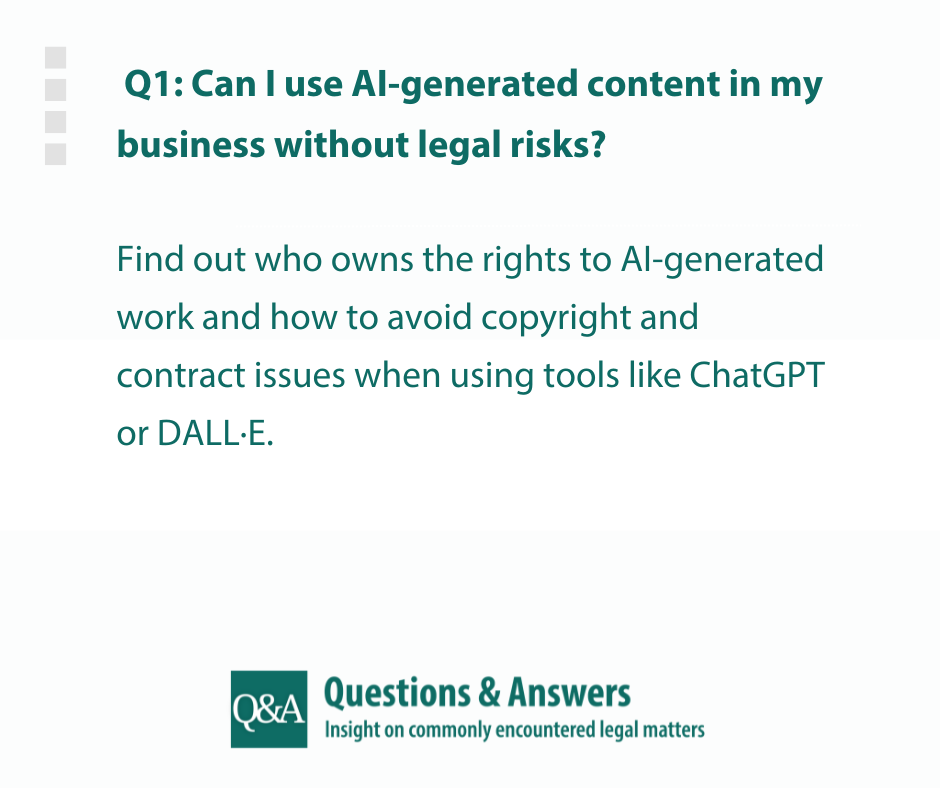
Can I use AI-generated content in my business without legal risks?
AI tools like ChatGPT and DALL-E can be powerful business resources, but using AI- generated content comes with legal considerations. Business owners should understand who owns the rights to AI-created work and whether the content could unintentionally infringe on someone else’s copyright. Reviewing platform terms and having clear policies for AI use can help reduce legal contractual risks.
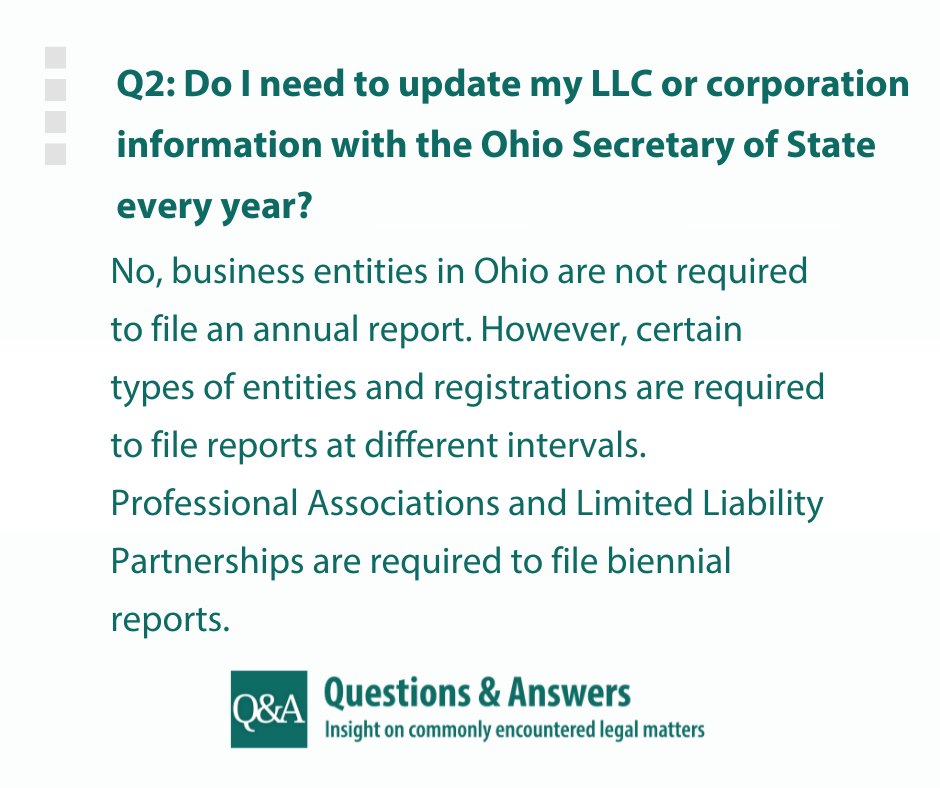
Do I need to update my LLC or corporation info every year?
In Ohio, LLCs and standard for-profit corporations generally do not have to file an annual report every year with the state.
You still need to update the state when certain information changes, such as:
- Your statutory agent (registered agent)
- Business address
- Company name
- Certain organizational details
However, some entity types in Ohio do have periodic filing requirements, like certain professional associations or LLPs.
New Ohio business owners often receive official-looking mailers demanding fees for “annual compliance” or “records.” Many are just solicitations, not state requirements.
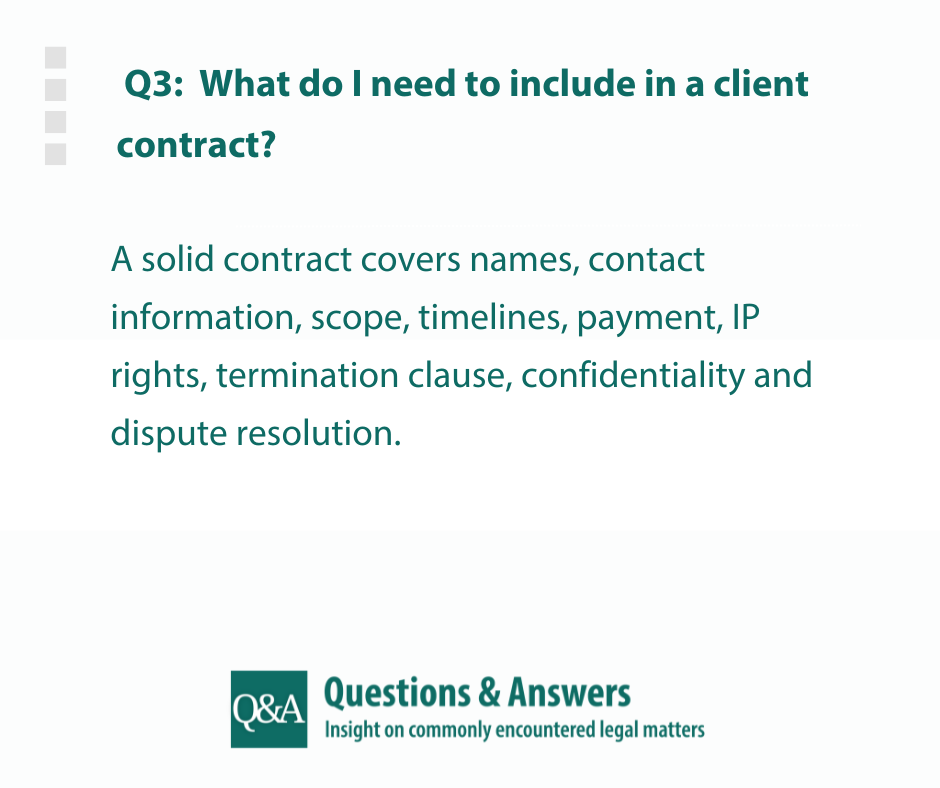
What do I need to include in a client contract in 2026?
A strong client contract should clearly outline the scope of work, payment terms, timelines, ownership of intellectual property and how disputes will be handled. As business relationships become more digital and remote, relying on outdated templates may leave out important information. Customized agreements can help both parties avoid misunderstandings down the road.
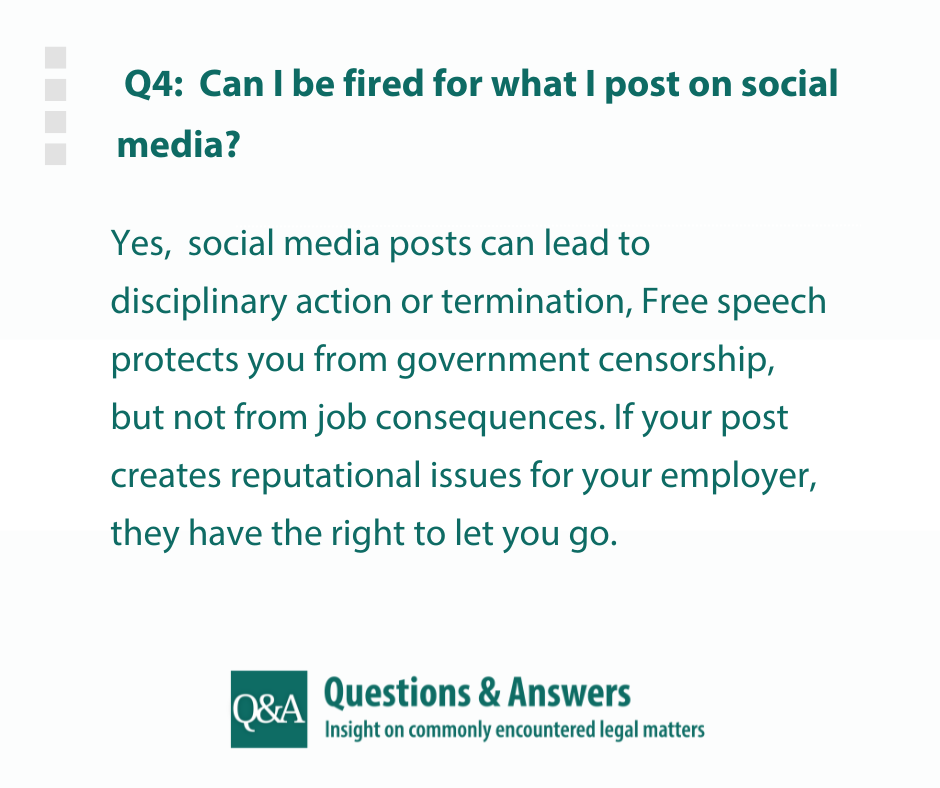
Can I be fired for what I post on social media?
In many situations, yes. Employers may take action over social media posts that violate company policies, damage workplace relationships or negatively impact the business. However, certain speech may still be protected under labor or employment laws, making it important to understand where the line is between personal expression and fireable conduct.
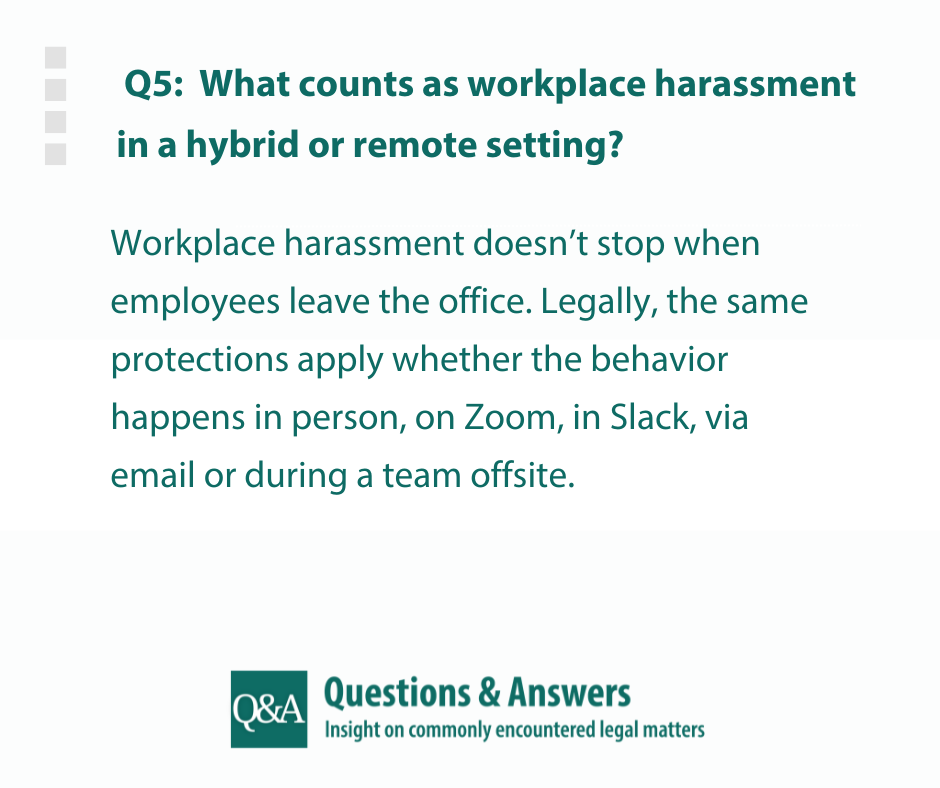
What counts as workplace harassment in a hybrid or remote setting?
Workplace harassment is no longer limited to in-person interactions. In hybrid and remote workplaces, inappropriate behavior can happen through other communication-based apps, virtual meeting spaces, emails or other digital communication platforms. Employees should understand what behavior may qualify as harassment and how to properly document and report concerns.
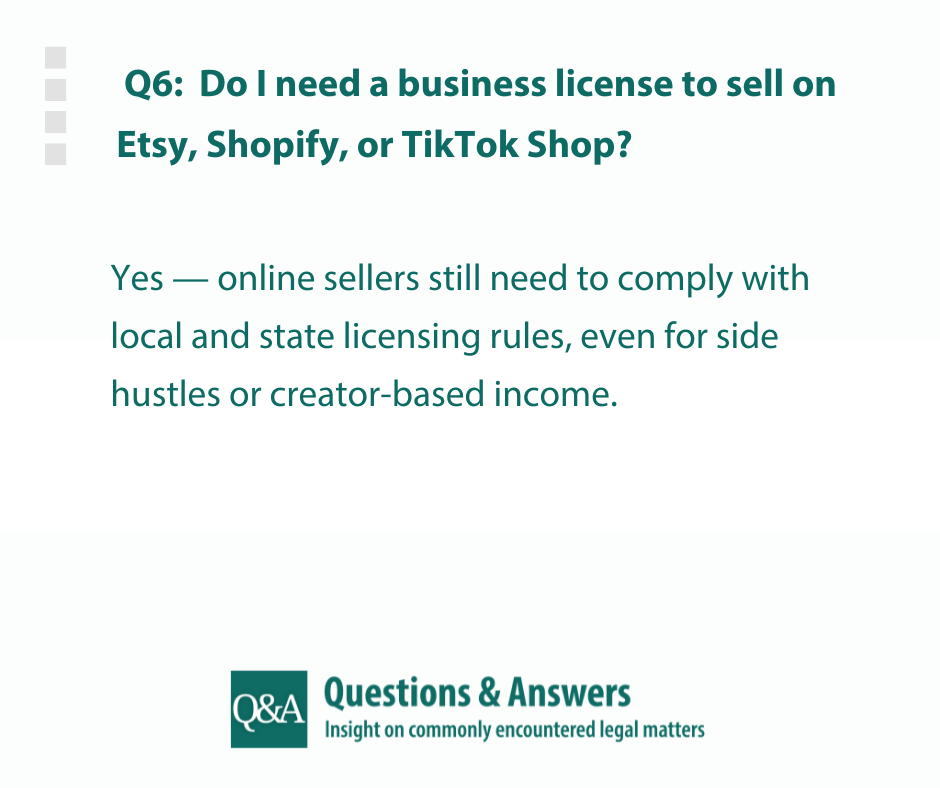
Do I need a business license to sell on Etsy, Shopify, or TikTok Shop?
Even online businesses and side hustles may need local or state business licenses to operate legally. Requirements can vary depending on where you live, what you sell and how your business is structured. Before launching an online store, it’s important to check licensing, tax and registration obligations to avoid compliance issues later.
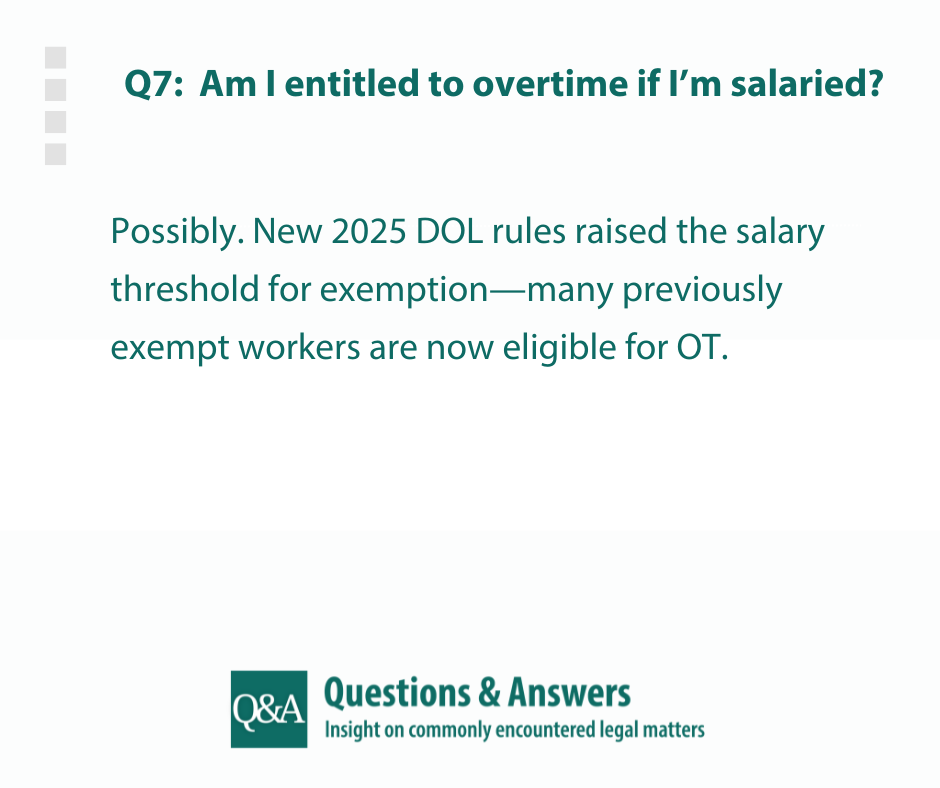
Am I entitled to overtime pay under new rules?
Possibly. Recent Department of Labor updates increased the salary threshold for overtime exemptions, meaning some employees who were previously classified as exempt may now qualify for overtime pay. Employers and workers alike should review job duties and salary classifications to ensure compliance with the updated rules.
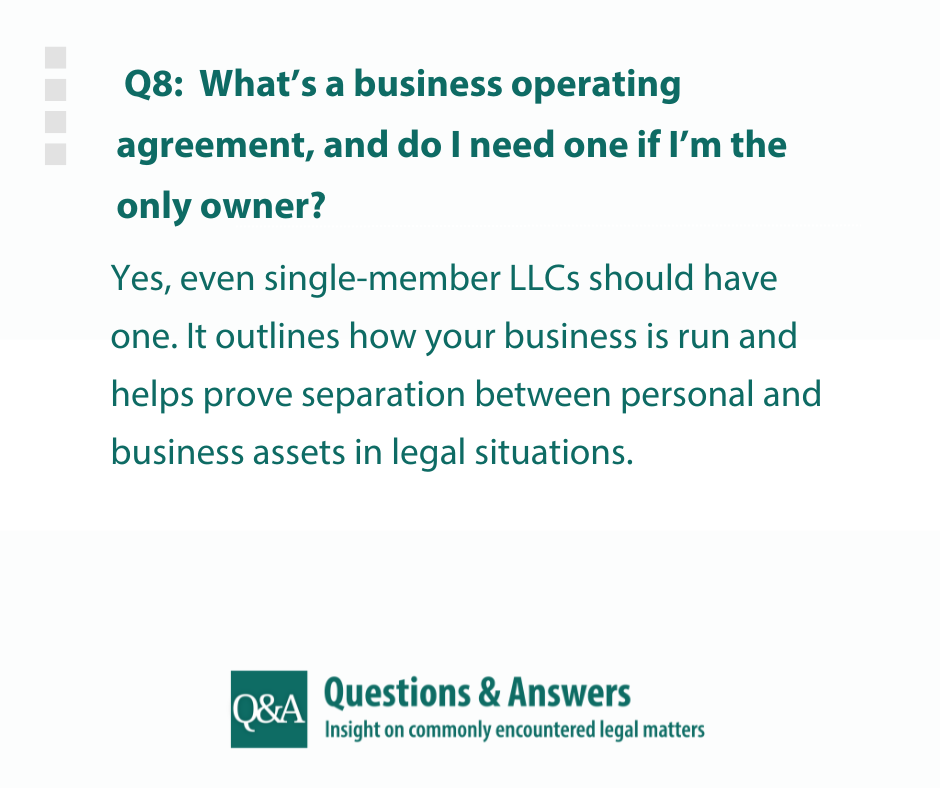
What’s a business operating agreement, and do I need one if I’m the only owner?
Yes — even single-member LLCs should have an operating agreement in place. This document outlines how the business is managed and helps establish a clear separation between personal and business assets. Having one can strengthen liability protection and provide clarity if legal or financial issues arise.
(Business lawyer Shawna L’Italien shares key provisions to include in an operating agreement for LLCs in this article.)
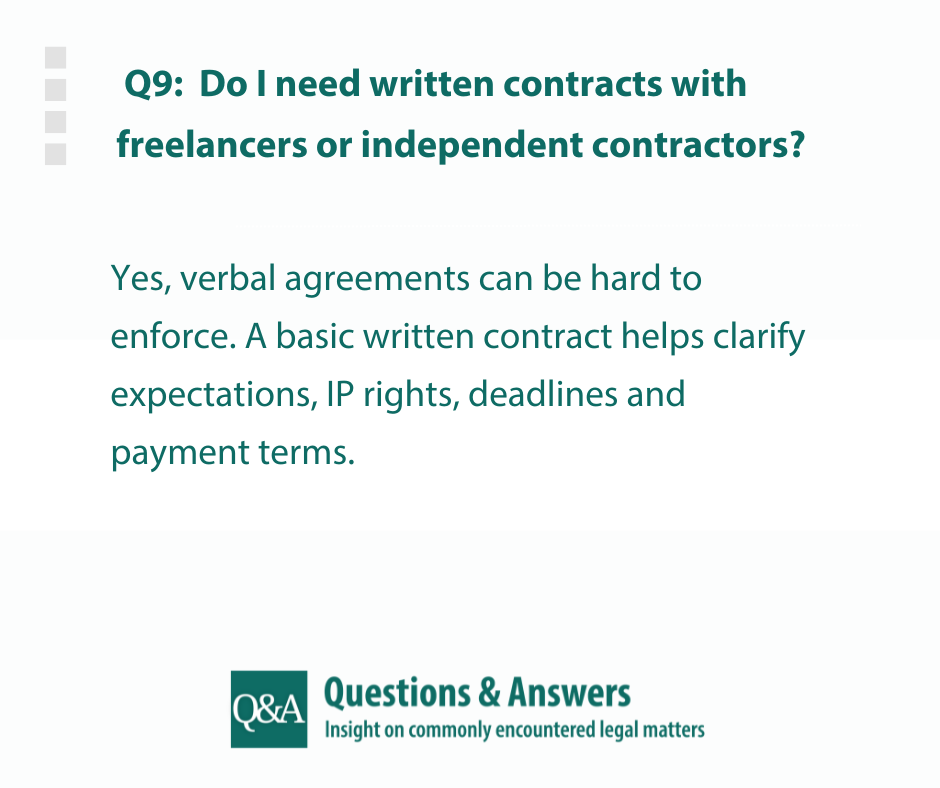
Do I need written contracts with freelancers or independent contractors?
Written agreements are one of the best ways to avoid disputes with freelancers or contractors. A clear contract can define deadlines, payment terms, ownership of work product and expectations for both sides. Verbal agreements may be difficult to enforce if disagreements occur later.
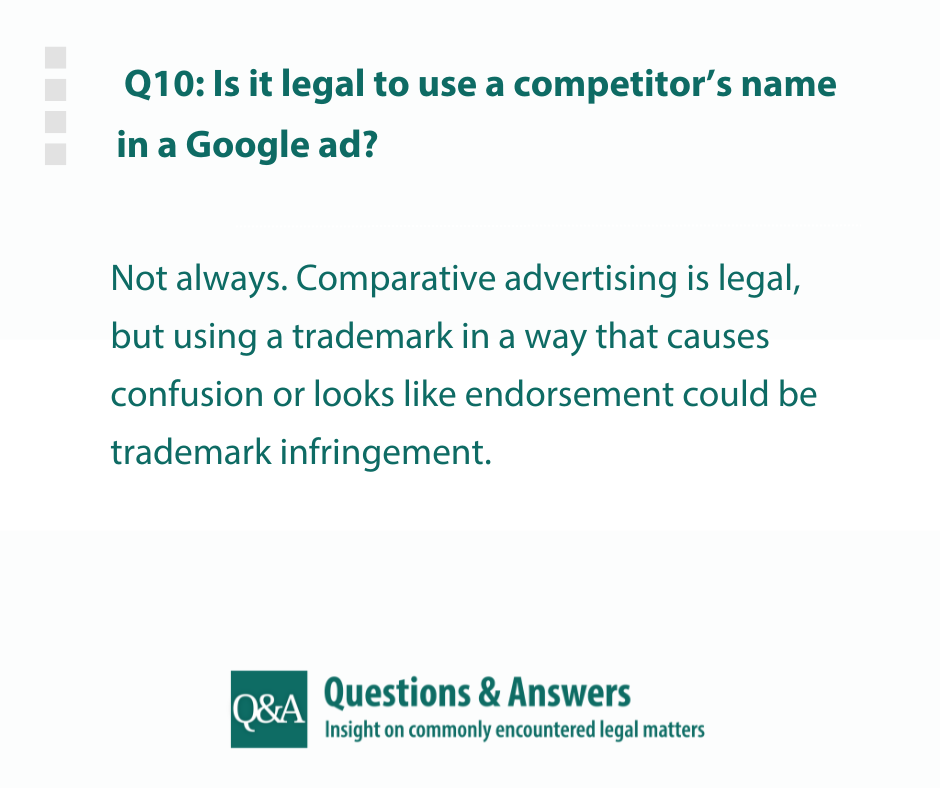
Is it legal to use a competitor’s name in a Google ad?
Comparative advertising is generally legal, but businesses should proceed carefully when using a competitor’s name or trademark in online ads. If the advertisement creates confusion, implies endorsement or misleads consumers, it could potentially lead to trademark infringement claims. Clear, accurate and non-deceptive messaging is key.
Click here to download this carousel as a PDF.
_____________
Shawna L. L’Italien, a business lawyer in the Salem office of Harrington, Hoppe & Mitchell, focuses her practice on business financing and organization, commercial transactions, real estate transactions, employment law, succession planning and mergers and acquisitions. She can be reached at (330) 337-6586 or at slitalien@hhmlaw.com.